
News Category
Contact Us
-
SHENZHEN HANDOPTICAL MANUFACTURE CO.,LTD
Address: No 104 Lijia Road ,Henggang, Longgang,Shenzhen,China(518115)
Mobile: 189 3867 9978
Wechat: 189 3867 9978
Q Q: 140 113 5799
Tel : +86-755-2862 4881
Fax: +86-755-2862 4880
E-mail: vip@handoptical.com
WhatsApp:+44 771 948 3678
Contact: John wong
Meta smart glasses help people with low vision, and AI technology improves life autonomy
With the improvement of people's living standards and the use of artificial intelligence products more and more widely, smart glasses developed by Meta and Ray-Ban have become prescriptionable low vision aids at Helen Keller Service Centers in Brooklyn and Long Island, USA. With three core functions - optical character recognition, environmental Q&A and AI voice assistant, the device effectively helps patients with low vision improve their ability to live independently and travel. Originally designed for casual users to create social media content hands-free, Meta smart glasses have become a practical tool in low vision rehabilitation. The device can not only read printed and handwritten text, respond to specific questions from users about the environment, but also implement voice interaction services similar to Siri or Alexa. At the Helen Keller Service Center, many people with low vision have improved their daily lives by wearing these glasses. Although there are smart glasses with similar functions such as Google Android XR on the market,

Meta glasses have attracted attention for their convenient design and comprehensive capabilities. Optical character recognition: From paper to logo, you can understand it as soon as you "listen" Compared to traditional text-to-speech devices or multiple mobile applications, Meta Glasses is equipped with an advanced optical character recognition system that instantly reads forms, menus, logos and handwritten content, and supports information summarization. Patients no longer need to carry bulky CCTV equipment or repeatedly adjust the shooting angle of their mobile phones, achieving a convenient experience of "wearing and reading".
This feature allows users to have more autonomy when working, reading emails, or handling personal finances, which is a significant help for people with all types of vision impairments. Environment Interaction: Answer the surrounding situation in real time Users can ask the glasses questions such as "What's in front of me?" Or "Is the door open or closed?" " to determine the position of obstacles, seats or people. A patient once asked at the snack table, "Are there potato chips?" The glasses successfully identified the location of the barbecue-flavored potato chips. Such interactions increase the confidence of people with low vision to move independently and help them complete daily activities such as finding a seat or walking through the doorway. Voice assistants: Free your hands and communicate instantly By synchronizing with the mobile phone address book, users can make hands-free calls and send messages. For travelers holding blind canes or leading blind dogs, they do not need to stop to rummage through their mobile phones, and can complete the operation directly through voice commands, which not only improves safety, but also reduces the risk of detours and detention. In addition, Meta glasses can respond to various life problems, such as unit conversion, color recognition, etc., to help people with color vision impairment match clothing or classification files to further expand their application scenarios. Privacy design and user experience Users can adjust the volume of the device directly through their voice without opening the mobile app. Actual measurements show that when the volume is turned down to less than 50% in a quiet room, it is difficult for others to hear the content of the conversation clearly; Even if the volume is full in the outdoor environment, the voice message is not easy to be recognized by the people around it, effectively protecting user privacy.
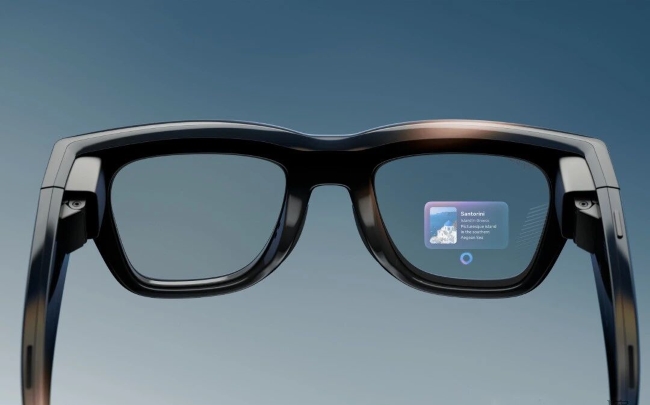
A new hope for low vision rehabilitation Meta smart glasses demonstrate the potential of combining artificial intelligence with wearables in assistive technologies. Some patients are excited to shed tears because they can achieve a greater degree of self-care. With the continuous upgrading of software and hardware iteration, the low vision group is expected to further expand its perception and mobility through such devices in the future.
Eye care professionals point to tracking and applying such technologies as an important direction to improve the quality of life of patients with low vision.
Meta and Ray-Ban's parent company EssilorLuxottica signed a long-term agreement in September 2024 to jointly develop multiple generations of smart glasses products over the next decade. In July 2025, EssilorLuxottica revealed that Meta's smart glasses revenue has more than tripled year-on-year and plans to produce 10 million pairs per year from 2026
Reprint the mirror classic article, if you have any objections, please contact and delete!
Shenzhen Handoptical manufacture co.,ltd